|
Nonprofit, investigative journalism on a mission to hold the powerful
to account.
|
Donate
|
|
|
|
|
|
|
|
|
Election Day is about two weeks away, and some voters are already casting their ballots in the 2026 midterms. Our reporters have spent the year covering the security of the country’s voting systems — and we just published a new investigation from Andy Mannix and Doug Bock Clark on that topic.
A few months into President Donald Trump’s second term, Department of Homeland Security appointees made an unusual request of its agency that protects election systems: Secretly acquire a voting machine and hack it.
The request, which shocked career staffers, was not acted upon. But it shows how the Trump administration has tried to use the Cybersecurity and Infrastructure Security Agency for its own ends while draining it of its staff and resources. Some state authorities said they no longer trusted the administration enough to share information with CISA, a key to the agency’s success in the past.
A White House spokesperson defended Trump’s handling of election security in a statement. “President Trump has done more than any other President to ensure we have free and fair elections,” said Lauren Bis, who referred specific questions about CISA’s handling of elections to DHS. DHS and CISA did not respond. |
|
|
|
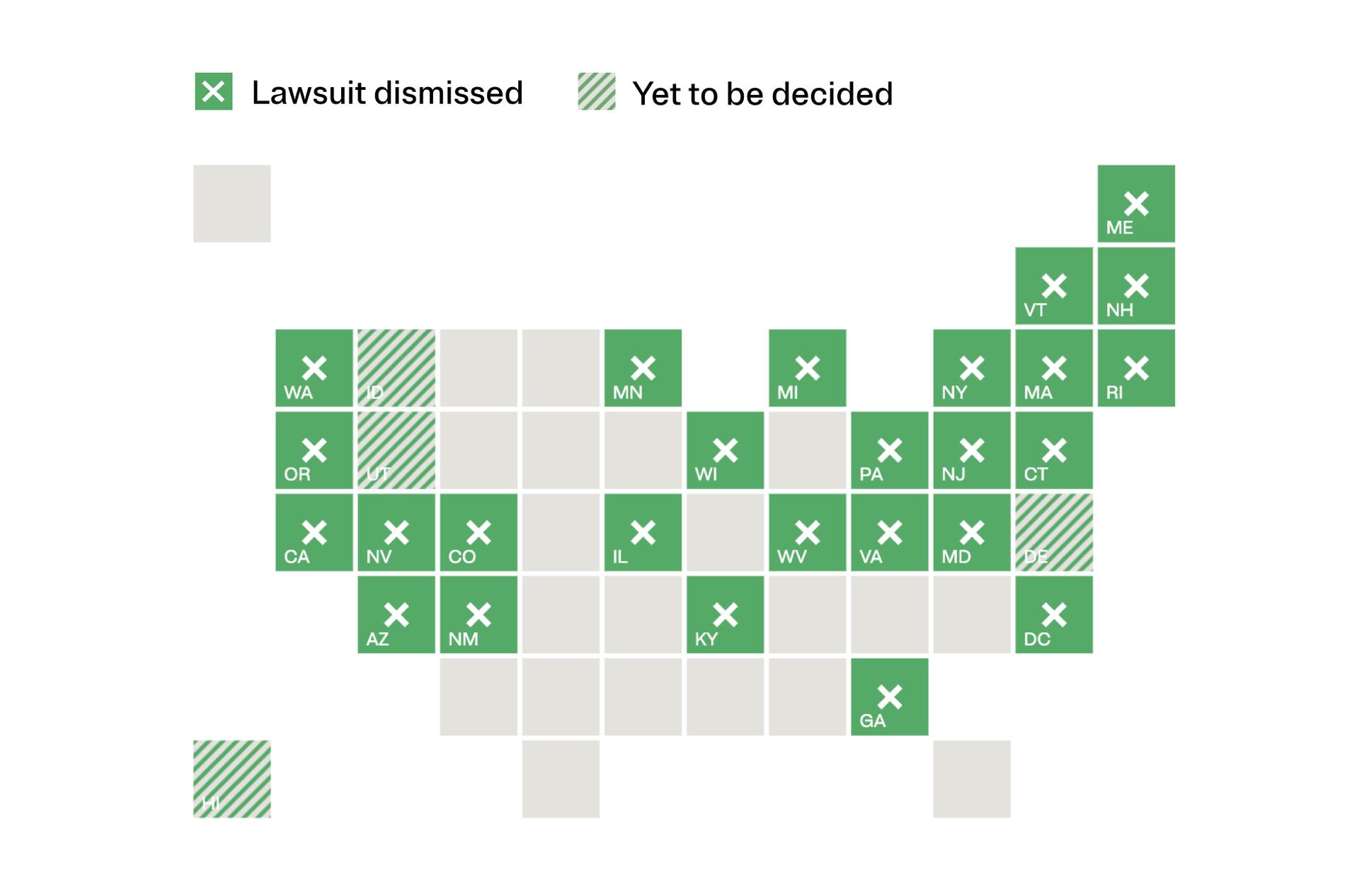
Since September 2025, the Department of Justice’s Civil Rights Division has sued 30 states and Washington, D.C., to demand their unredacted voter rolls. The lawsuits are part of Trump’s broader push to take federal control over elections and prosecute alleged noncitizen voters.
But, over and over, the cases have been thrown out. While four cases are still ongoing and one state (Oklahoma) settled its suit, judges in each of the 26 other states rejected the DOJ’s arguments. “Clearly, this demand is devoid of any factual basis,” one judge wrote.
Of the judges randomly assigned to the 26 cases, eight were Trump appointees, four were appointed by another Republican — George W. Bush — and 14 were appointed by Democrats.
The Trump administration has appealed most of its losses to federal appeals courts and has said it will consider taking its fight to the Supreme Court. A DOJ spokesperson issued a statement in response to our questions: “Our attorneys are skilled, principled advocates who argue every case honestly and in good faith. Disagreement with the government’s position is not evidence of bad faith. We look forward to making our case on appeal.” |
|
|
|
For 86 years, Missouri has held on to a nonpartisan system of selecting its top judges. Under what has come to be known as the Missouri Plan, lawyers help to choose candidates from which the governor then must make court appointments. But after the state Supreme Court overruled the GOP’s recent redistricting plan — which was undertaken at Trump’s behest — some Republican lawmakers are calling for the system to be overturned.
Whether there’s enough support to repeal the state’s judicial selection system remains to be seen. Any change would ultimately have to be approved by the voters.
The drama in Missouri has played out as Republicans in the state — and elected officials nationwide — have sought to weaken institutions that limit their power. In North Carolina, the Republican-dominated General Assembly stripped authority from Democratic governors. In Wisconsin, Republicans threatened to impeach a newly elected Supreme Court justice to protect gerrymandered maps. And in New York, Democrats bypassed an independent commission to pass a gerrymander that favored them, but the state’s highest court struck it down.
|
Jeremy Kohler, who wrote the story above, has been reporting on democracy in the state this year. Revisit some of his recent reporting: |
|
|
|
Q: What are you focusing on in your current reporting? |
|
|
|
I’m always interested in the backstory and influences behind attempts to change how voting happens. Text or call me with tips at 480-476-0108. That’s my Signal number, too. Jen covers threats to democracy, elections and voting rights. |
✉️ Plan to vote by mail in the 2026 midterms? We put together a guide for you. Read it here. |
|
|
|
Your mobile carrier knows who you are. We don't. |
Cape is America's privacy-first mobile carrier—unlimited talk, text, and 4G/5G data, built from the ground up with privacy and security at it's core.
Most carriers track everything: where you go, who you call, what you do. Cape collects the minimum amount of information required to run your service, deletes call and text metadata after 24 hours, rotates your network ID to prevent tracking, defends against SIM-based attacks, and more.
Privacy shouldn't cost more. Switch today and get $29 off for life. |
|
|
|
Was this email forwarded to you from a friend? Subscribe. |
This email was sent to nfixico@gmail.com. |
ProPublica 155 Ave of the Americas, 13th Floor New York, NY 10013 |
|
|
|
|